A Kolkata watercolor artist explains why the medium's unpredictability, light, and difficulty are exactly what make it worth loving.
By Joy — watercolor artist, Kolkata. Exhibited at Indian Art Carnival, Shantiniketan 2025.
There is a moment in almost every watercolor painting where I stop, look at what the water has done, and think: I did not plan that. Sometimes it has gone wrong. More often, it has gone somewhere I could not have reached by planning alone.
That moment is what keeps me coming back.
For a deeper technical exploration of the physics and paper science behind the medium, read my full guide: What Makes Watercolor Unique — The Medium That Does Not Forgive.
I have worked in other mediums. I understand the appeal of being able to correct, overwork, and revise. But watercolor does not offer that option, and after years of painting in it, I have come to think that the constraint is not a limitation. It is the whole point.
What Actually Makes Watercolor Different
The medium is unusual in a specific, physical way that is worth understanding before anything else.
Most paints sit on top of a surface. Watercolor is absorbed into it. When I mix a wash and lay it onto 300gsm cold-pressed cotton paper, the water carries the pigment into the fibres. As the water evaporates, the pigment settles. Sometimes evenly, sometimes in granular clusters, sometimes pushed to the boundary of the wet area where it dries in a sharp, dark edge. Painters call these blooms and hard edges. I call them decisions the painting makes for itself.
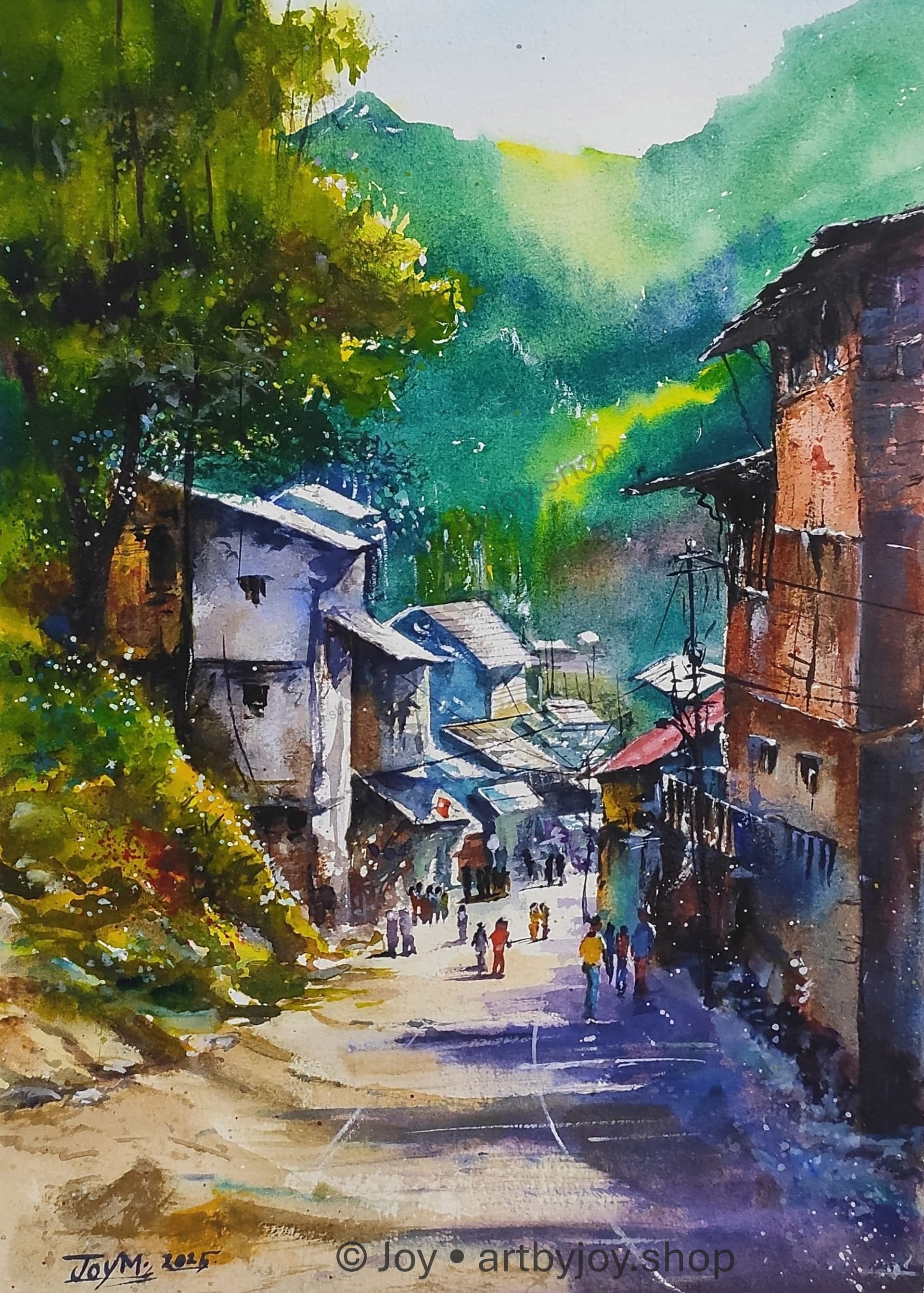
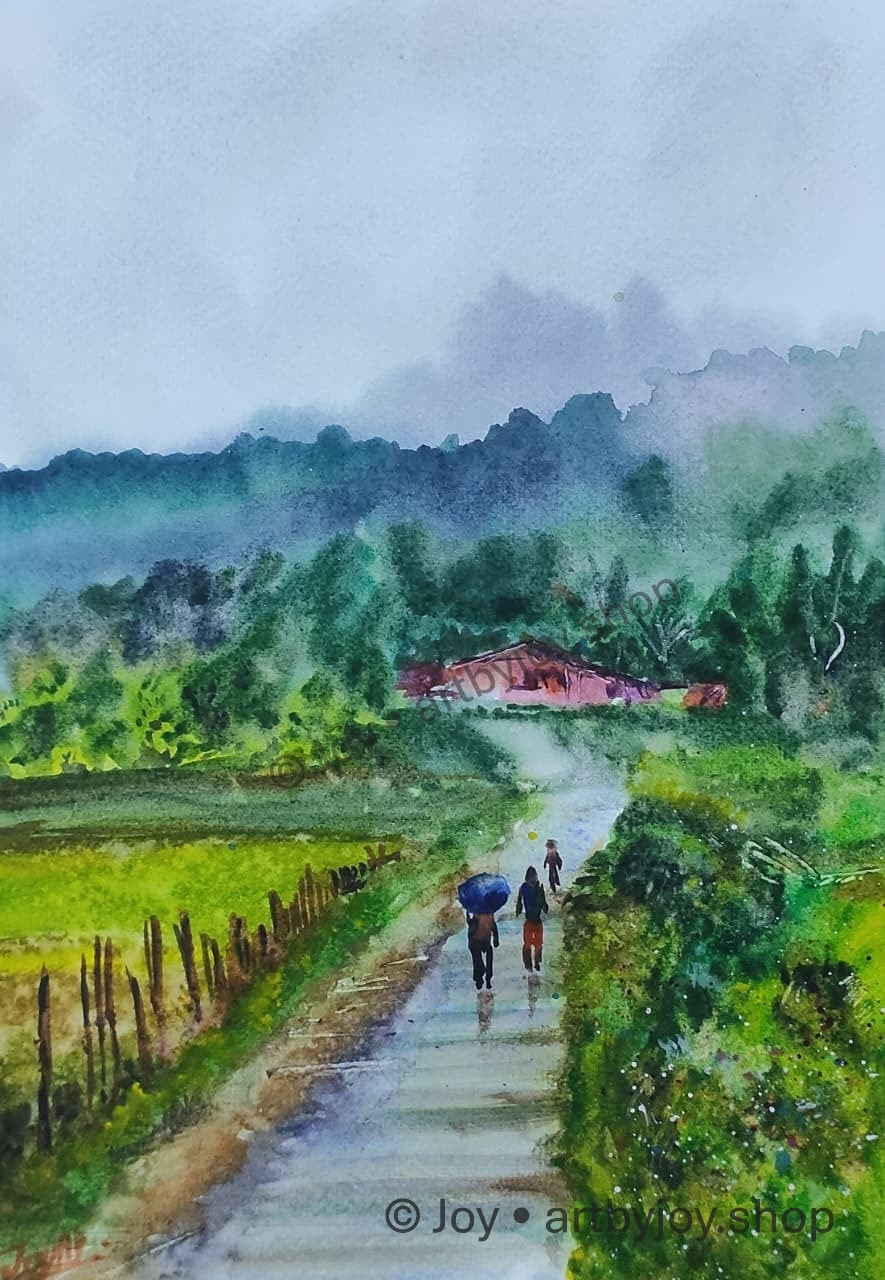
This is what gives watercolors that particular quality people describe as alive. The marks are not fully authored. Some of what you see in Monsoon Village — the way the mist sits at the treeline, the softness of the rooftops dissolving into cloud — came from the water choosing where to go. My job was to set up the conditions and then let it happen.
No other medium works quite like this. And no two watercolor paintings, even of the same subject by the same hand, are ever identical.
The Physics of Transparent Pigment
Here is something that matters if you want to understand why watercolors look the way they do.
The pigment used in watercolor is transparent. Light passes through the paint layer, strikes the white paper underneath, and reflects back through the pigment to your eye. This is fundamentally different from opaque paints, where the light reflects off the paint surface itself.
The result is a kind of luminosity that watercolors have and most other mediums do not. The light appears to come from inside the painting rather than off its surface. Skies feel soft. Water feels wet. Sunlight in Morning in Kumaon glows the way it actually does at that hour, not because I mixed the right colour but because of how transparent pigment on white paper handles light.
This is also why layers in watercolor work differently from layers in oil or acrylic. Each transparent wash modifies what is already there rather than covering it. Three layers of different blues produce a colour with a depth that a single application of the same apparent hue cannot match.
Why You Cannot Hide Mistakes
This is the part that makes watercolor genuinely difficult, and genuinely honest.
In oil painting, you can paint over errors. In acrylic, you can build up corrections with opaque passages. In watercolor, the only reliable way to remove pigment once it has dried is to lift it carefully with a damp brush, and even then you are left with a ghost of what was there. Overwork a passage, and the surface of the paper breaks down. Rush a wash before the previous layer has dried, and the wet paint lifts and blooms in ways you cannot control or predict.
Watercolor requires you to plan forward rather than correct backward. You have to know where the light is before you start, because the lights in a watercolor painting are the white of the paper. They are not added. They are preserved by working around them.
This makes watercolor one of the most demanding mediums to work in. It also means that a finished watercolor painting is an honest record of every decision the artist made in sequence. There is no revision buried underneath. You are seeing the actual thought process, in the order it occurred.
What Unpredictability Actually Feels Like
I want to be specific about the unpredictability, because it gets misunderstood.
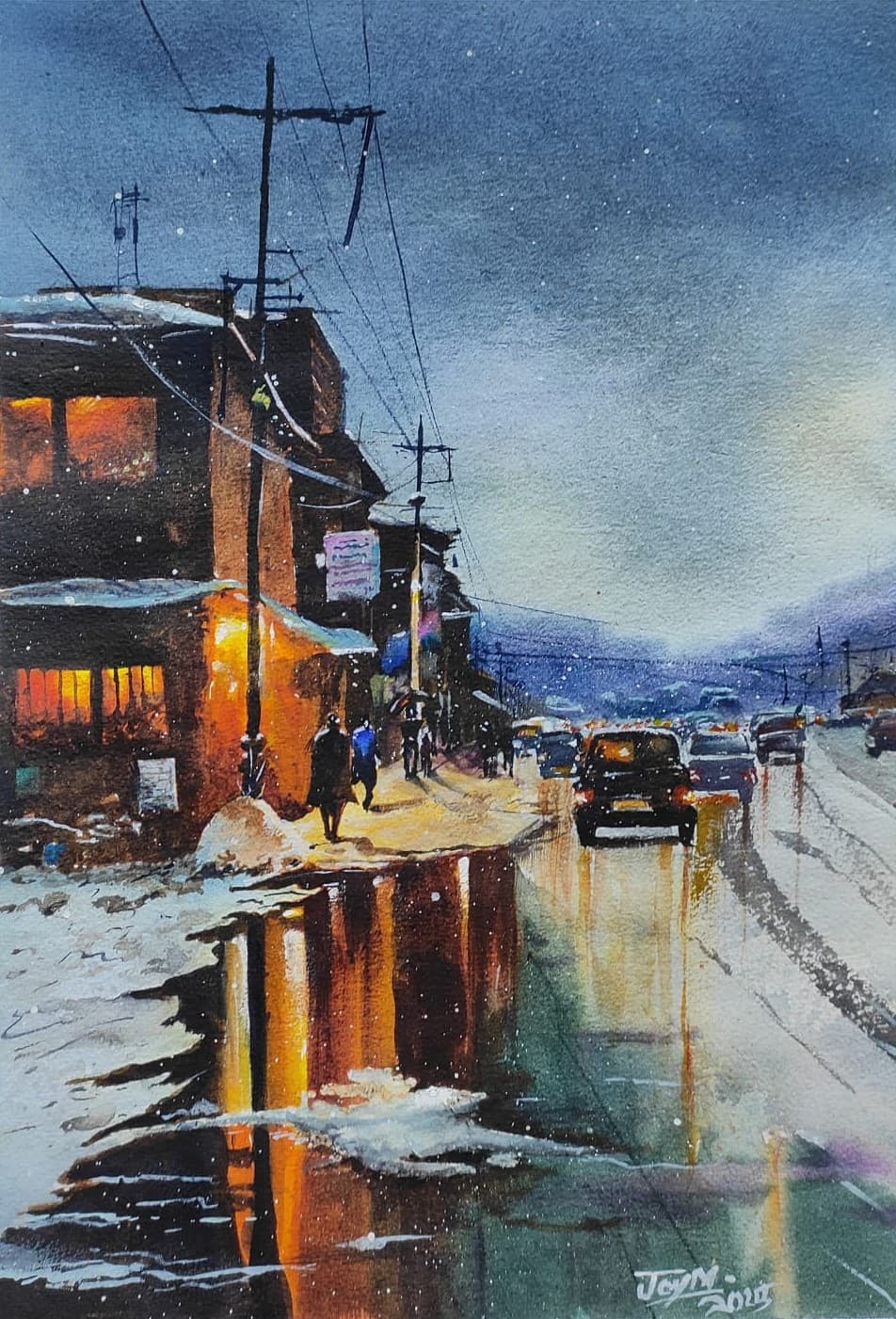
It is not chaos. It is a particular kind of collaboration between intention and material behaviour. When I painted A Snowy Morning in Kedarnath, I knew broadly what I wanted: the weight of fresh snow, the cold air made almost visible, the peaks disappearing into the sky. I knew the palette, the paper, the sequence of washes. But the exact quality of the granulation in the sky passage — the way certain pigments clustered into something that reads as atmosphere rather than paint — that was the paper and the pigment settling together. I set the conditions. They produced the result.
The skill in watercolor is partly technical and partly about knowing when to stop. Knowing when the painting has found what it was looking for and adding more would only take it somewhere worse. That is a harder thing to teach than brush technique.
Why It Connects So Directly to Landscape
I paint mostly landscapes, and watercolor is unusually well suited to that subject.
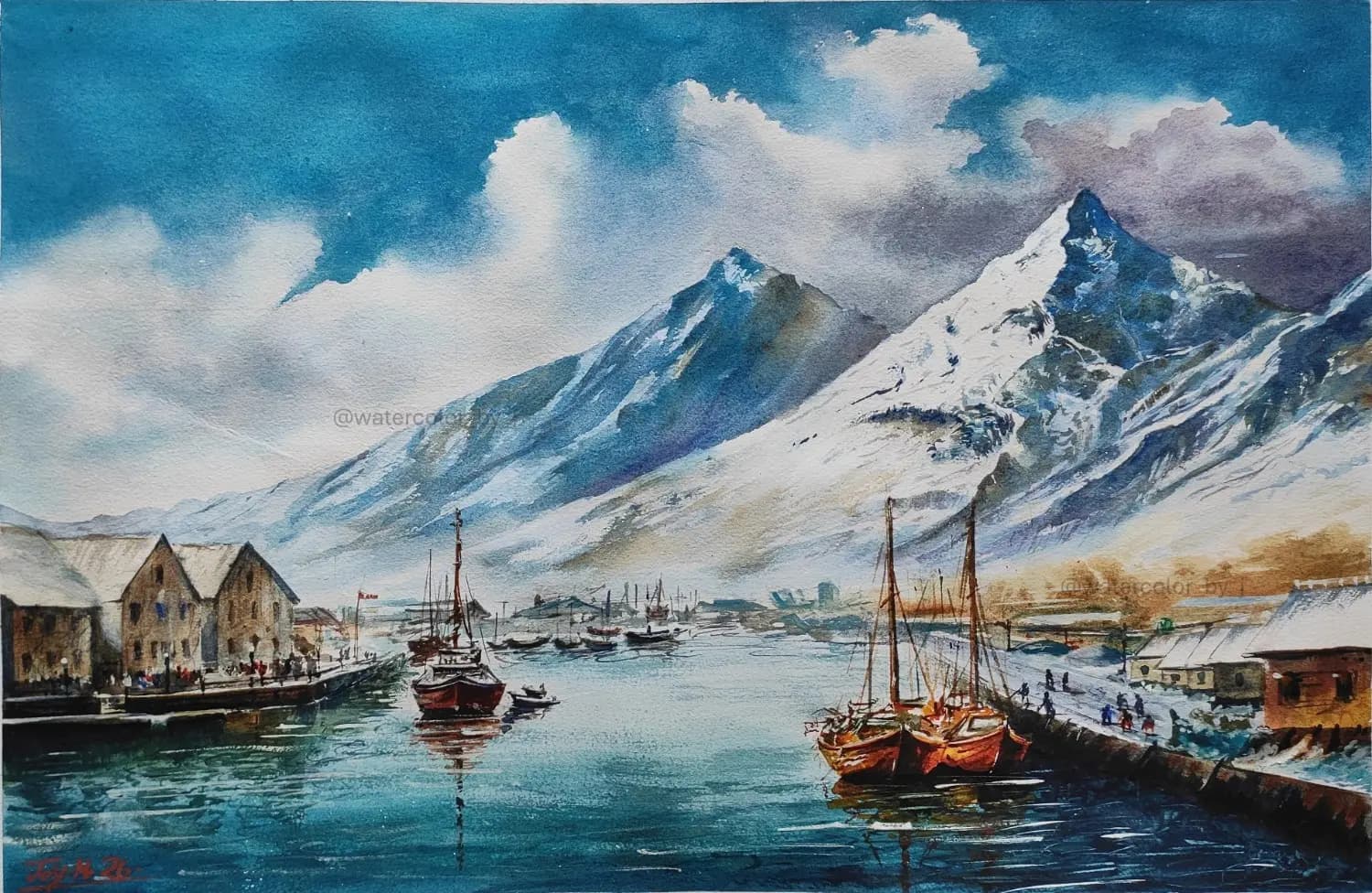
The medium behaves the way light and atmosphere actually behave. A wet wash dropped into a wet sky passage spreads the same way mist spreads through a mountain valley. Hard edges appear where they should: the boundary between a dark treeline and a pale sky, the line where water meets a stone bank. Soft edges appear where they should too: clouds, fog, the far ridgelines of the Himalayan range dissolving into haze in Silent Harbor at North and the Kumaon pieces.
This sympathy between the medium and the subject is not an accident. There is a long history of watercolor in landscape painting precisely because the medium shares characteristics with what it depicts. Water in paint behaves like water in a scene. Pigment granulation resembles geological texture. Transparency creates atmosphere.
What Watercolor Has Taught Me That Other Mediums Have Not
Working in watercolor for years has changed how I think about making things generally, not just paintings.
You cannot start at the end and work backward. You have to commit to a sequence and follow it through. You have to distinguish between decisions that are recoverable and decisions that are not, and make peace with the difference. You have to trust that the process, followed carefully, will produce something worth arriving at, even when the midpoint looks like a disaster.
Every watercolor goes through a stage where it looks irredeemable. Flat, muddy, nothing like what it should be. The experienced response to that stage is to keep going, because the painting is not finished yet. What looked like a mistake at the halfway point often resolves into something essential.
That lesson has a longer life than the paintings themselves.
A Note on the Paintings You Can See Here
Everything in this gallery was made the way I have been describing. Cold-pressed cotton paper, professional-grade transparent pigments, no digital assistance, no underpainted guides. The landscapes series covers the Indian Himalayas, monsoon villages, Scandinavian harbours, and a few narrative and figurative pieces made in the same medium.
If you want to understand what I mean about texture, luminosity, and paint behaviour, the best thing to do is look at a close-up photograph of any of the originals. The paper surface is visible. The granulation is visible. The hard and soft edges tell the story of how the painting was made.
If you want to experience that in person, a commissioned piece made to a specific subject and scale is possible, and the process from brief to finished painting is something I can walk you through directly.
If you want to understand how these qualities translate to the actual experience of owning art, read my post on why original watercolor paintings feel more alive than prints.
If you are ready to bring one into your home, I have a detailed guide on how to buy original watercolor paintings online that covers everything you need to know about provenance and shipping.
Browse the original watercolor landscapes, explore the narrative collection, read about why originals feel different from prints, or get in touch with any questions.
Recommended Reading
- Why Original Watercolor Paintings Feel More Alive Than Prints — Depth, light, and texture explained.
- How to Buy Original Watercolor Paintings Online — A guide to buying art safely and with confidence.
- How to Buy Art Directly From an Artist — Benefits of direct-to-collector relationships.
Frequently Asked Questions
What makes watercolor painting unique compared to oil and acrylic? Watercolor is absorbed into the paper rather than sitting on top of it, and it is transparent rather than opaque. This means light passes through the pigment and reflects off the white paper beneath, producing a luminosity that other mediums achieve with more difficulty. It also means mistakes cannot easily be corrected, which makes watercolor more demanding to work in but also more honest as a record of the artist's decision-making.
Why is watercolor considered a difficult medium? Watercolor requires planning forward rather than correcting backward. The lights in a watercolor are the white of the paper, preserved by working around them rather than added later. Overworking a passage breaks down the paper surface. Pigment cannot be fully removed once dry. Each decision has consequences that compound through the rest of the painting, which means experience and sequencing matter more than in mediums where revision is straightforward.
What is wet on wet technique in watercolor? Wet on wet means applying wet paint to paper that is already wet, either from a previous wash or from deliberate pre-wetting. The wet paint spreads and diffuses into the existing moisture, producing soft edges and gradual colour transitions. It is the technique behind soft skies, mist, and atmospheric passages in landscape painting. The degree of spread depends on how wet the paper is, which is part of what makes the technique unpredictable and expressive.
Why do watercolor paintings look luminous? Because the pigment is transparent. Light passes through the paint, strikes the white paper underneath, and reflects back through the pigment to the viewer's eye. The apparent colour is the result of the light's journey through the pigment layers rather than a reflection off the paint surface. Multiple transparent layers produce colour depth that feels lit from within rather than coated on the surface.
How do watercolor artists deal with mistakes? Carefully, and mostly by planning to avoid them. The most reliable correction technique is lifting: using a damp brush or clean cloth to pull pigment from a still-damp area before it fully dries. Once fully dry, pigment can sometimes be loosened with water and lifted, but a ghost of the original mark usually remains. The practical response to watercolor's irreversibility is to plan the sequence of a painting carefully before starting, and to know when a passage is finished rather than pushing further.
What paper do professional watercolor artists use? Professional watercolor artists typically use 100% cotton paper rated at 300gsm (140lb) or heavier. Cotton paper handles water differently from wood-pulp paper: it absorbs and releases moisture more evenly, tolerates multiple wet washes without buckling or breaking down, and the surface texture (smooth, cold-pressed, or rough) is consistent and predictable. Most of the work in this gallery is painted on 300gsm cold-pressed cotton paper, which produces the texture and granulation effects visible in the close-up photographs.
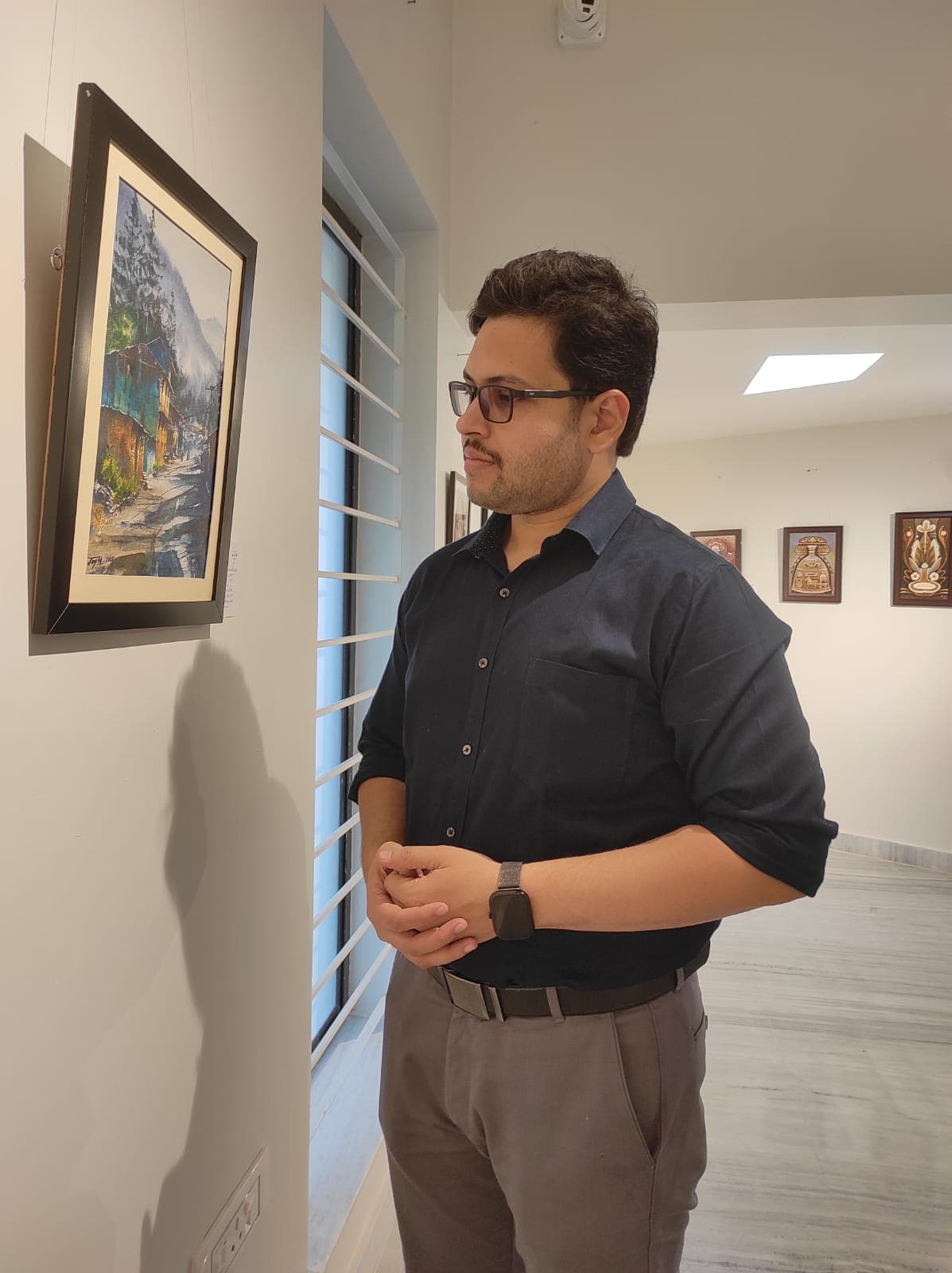
Written by Joy Mukherjee
Joy Mukherjee is a watercolor artist who paints landscapes, village scenes, and atmospheric moments using transparent watercolor on premium 100% cotton watercolor paper. His work is born from memory, light, and atmosphere.