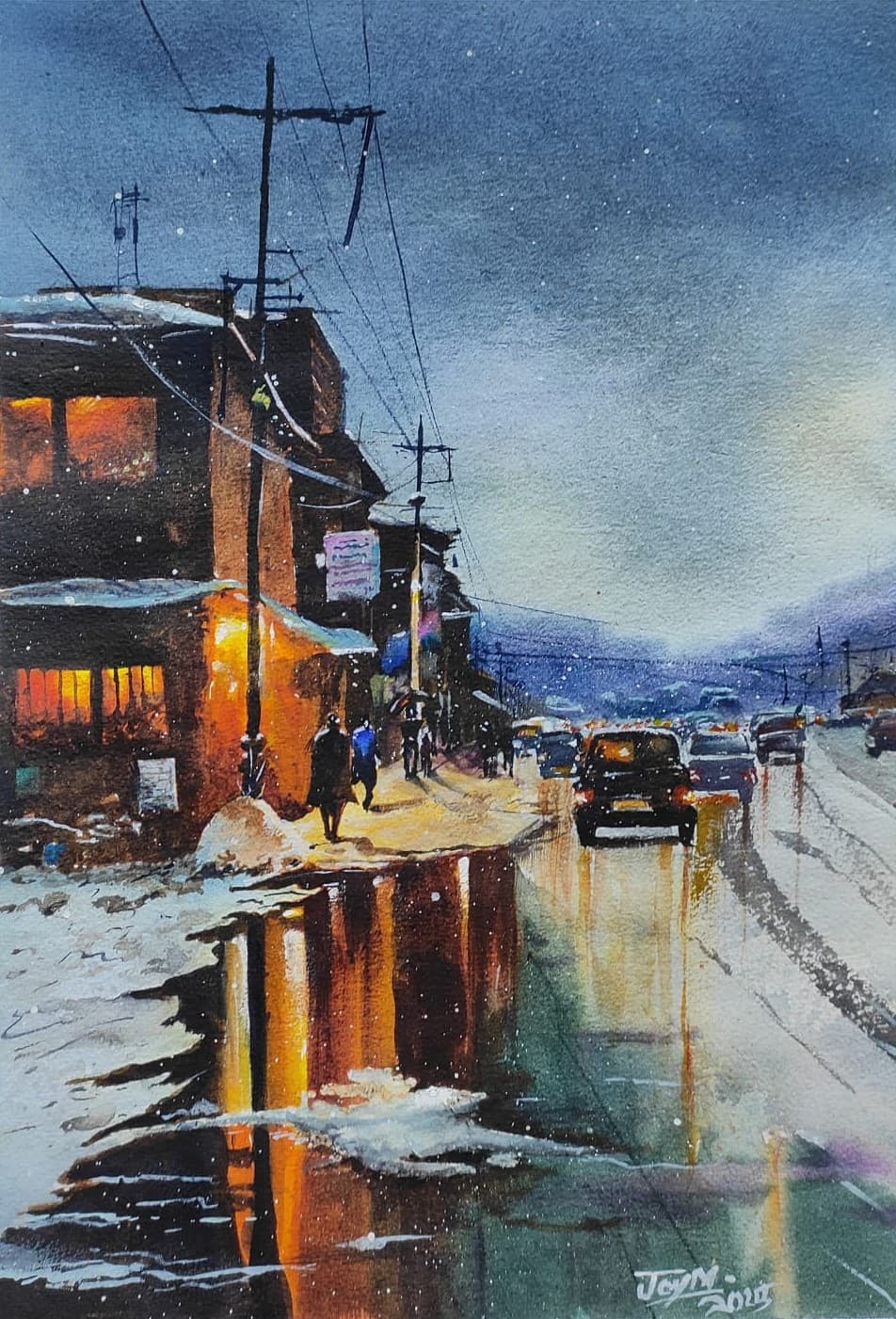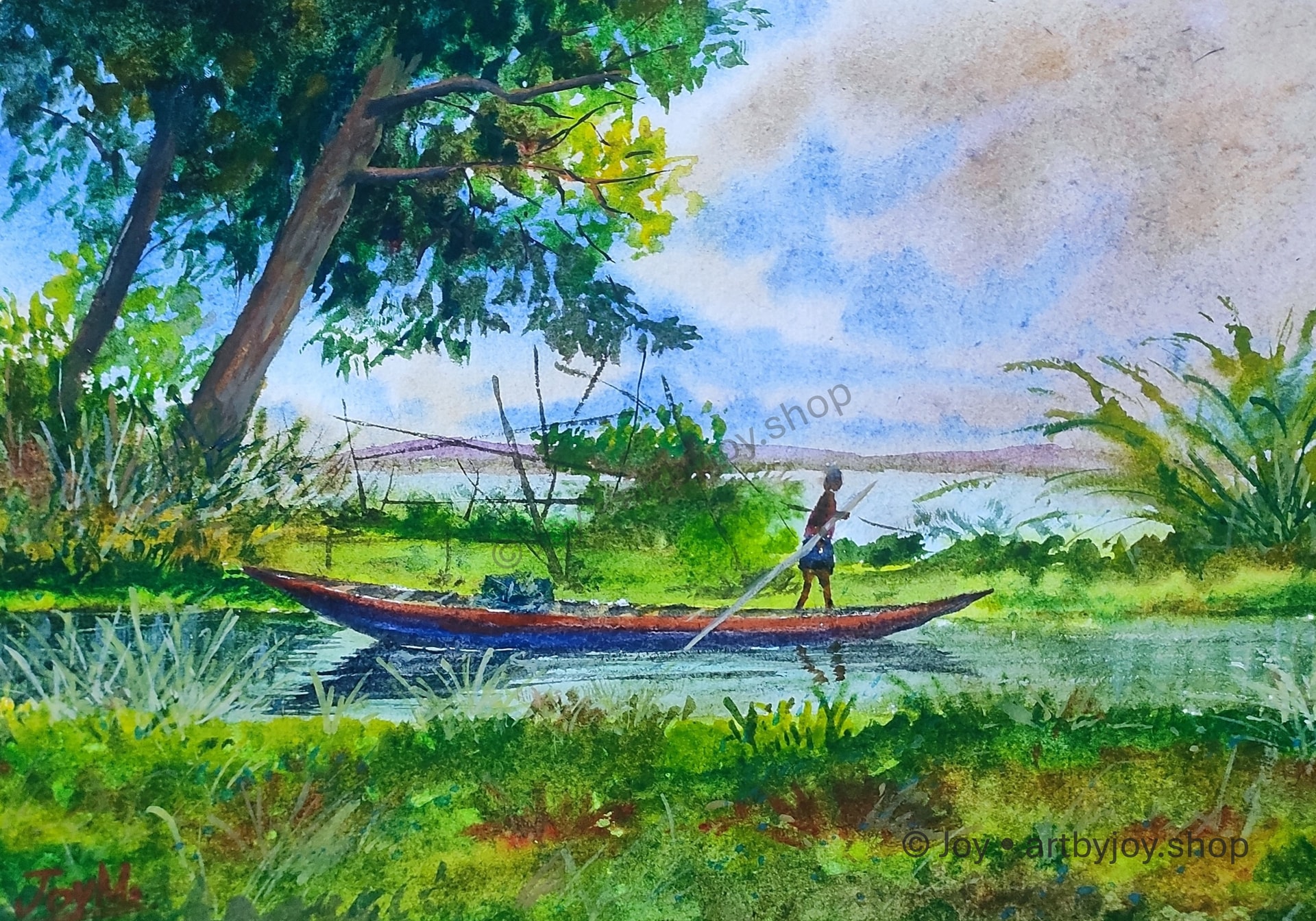
Buying art directly from an artist means better prices, real provenance, and a human connection marketplaces rarely preserve.
By Joy — watercolor artist, Kolkata. Exhibited at Indian Art Carnival, Shantiniketan 2025.
I built this website because I wanted collectors to be able to find original watercolor paintings without a gallery taking half the price, without a marketplace burying the listing under sponsored posts, and without the painting losing its story somewhere between the studio and the buyer's wall.
That is the practical reason. The deeper one is this: when someone buys a painting directly from the person who made it, something is preserved that gets lost in every other transaction. They know where it came from. The artist knows where it went. The painting has a provenance that starts at the source.
This post is for anyone who has thought about buying art directly from an artist's website but was not quite sure how it works, whether it is safe, or why it might be worth it over the more familiar routes.
Why Marketplaces Are Not Always the Best Place to Find Original Art
Platforms like Etsy, Saatchi Art, and Amazon Handmade have made art more discoverable, and that is genuinely good. But they are also built around a particular model: high volume, fast turnover, and algorithmic promotion of whatever sells fastest.
That model shapes what you see. Trending colours. Predictable compositions. Listings optimised for clicks rather than for the actual quality of the work. The platform's interest is in you completing a transaction. It is not in you finding something that will matter to you in ten years.
There is also the commission problem. Most marketplaces take between 30% and 50% of each sale. That money has to come from somewhere, which means either the artist earns less or the price goes up to cover it, or both. When you buy directly, none of that intermediary cost exists. The price reflects the work, not the platform's cut.
None of this means marketplaces are bad. They have a place. But if you are looking for original art from a specific artist, going directly to their website is almost always better in every measurable way.
What You Actually Get When You Buy Directly
Clearer provenance from the start
When you buy from an artist's own website, the chain of ownership begins right there. You know who made it, when, with what materials, and what it was called. The artist can tell you the story behind the work. That provenance travels with the painting for as long as it exists.
On a third-party platform, that clarity is often diluted. The listing may have been created by a reseller. The "original" may be a print misdescribed. The artist may not even be aware their work is being sold.
Transparent pricing that reflects the actual work
An artist pricing their own work knows exactly what went into it: the paper, the pigments, the time, the failed attempts before the good one. That pricing is honest in a way that marketplace pricing often is not. At this studio, a small original watercolor starts at INR 5,000 for a work around A4 size, scaling up based on dimensions and complexity. There is no markup for platform fees or gallery commission folded into that number.
Direct access to ask real questions
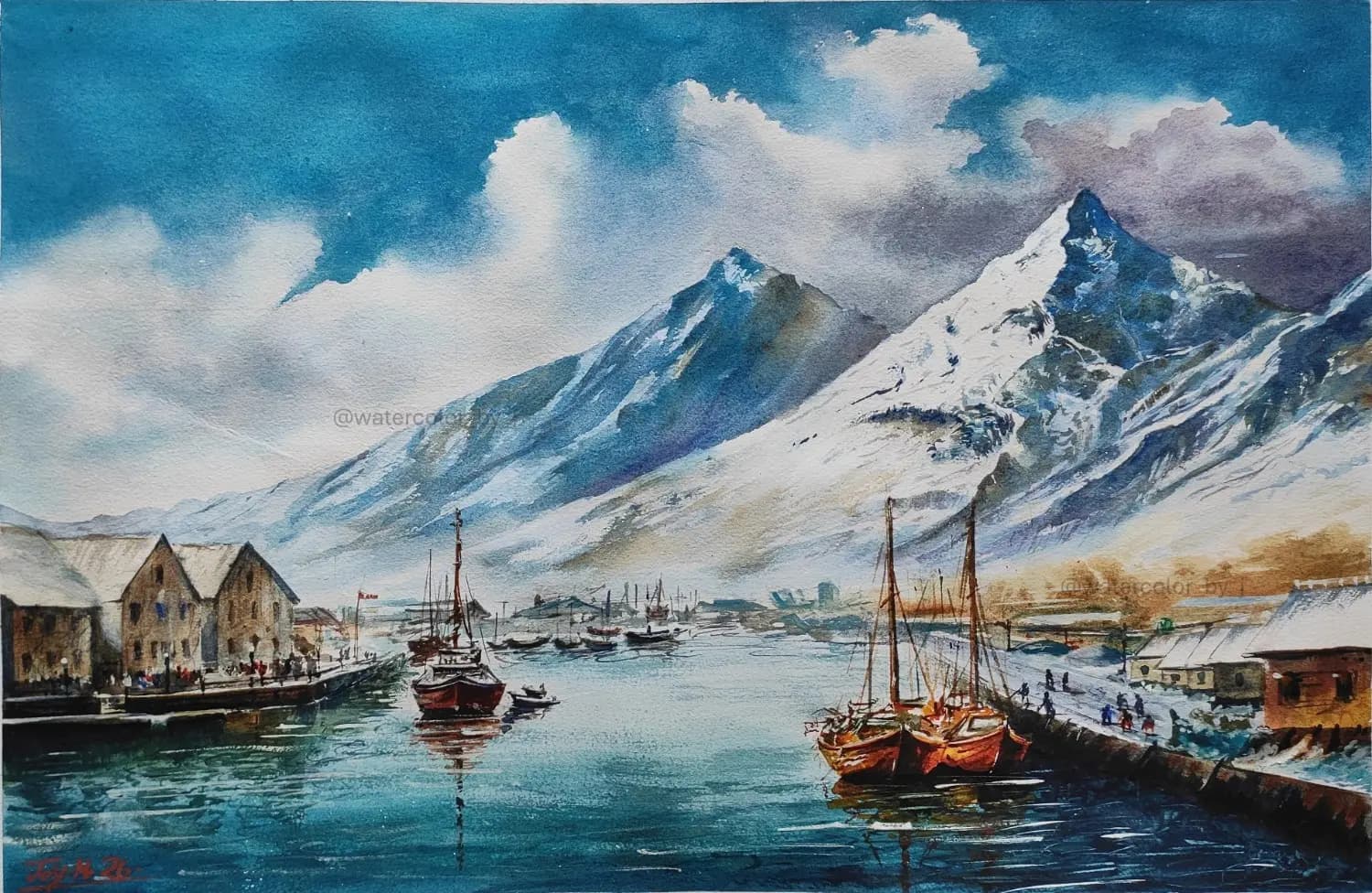
If you are considering Silent Harbor at North and want to know what kind of paper it is painted on, whether the blues will hold their depth in warm interior lighting, or how it would look in a particular room, you can ask me directly. I can photograph the surface detail, describe the framing options, or help you think through whether it is the right piece for the space you have in mind.
A marketplace listing cannot do that. A customer service representative on a large platform definitely cannot.
Work that was made for its own sake
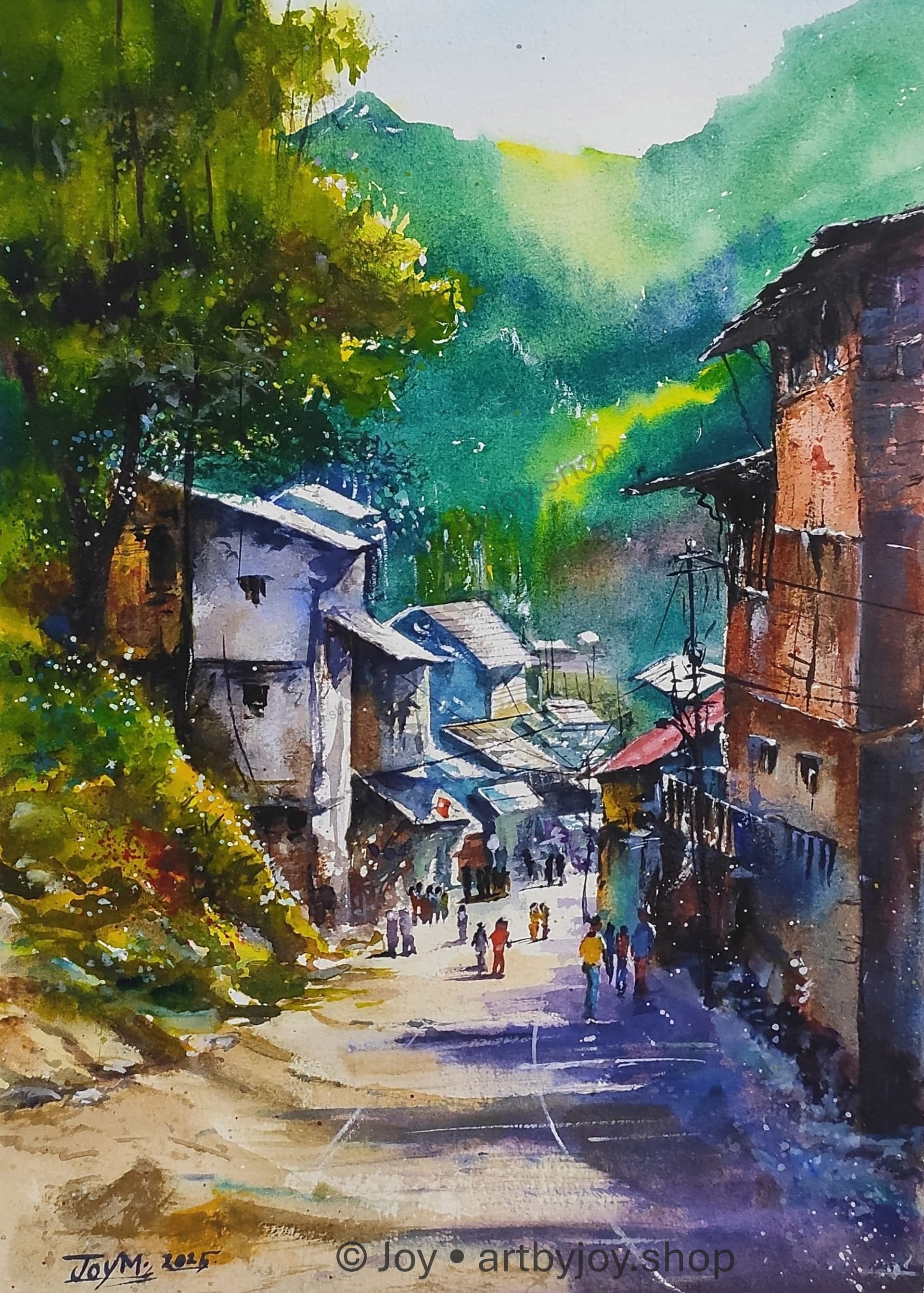
The paintings on this site were not made to match a trend or score well in A/B testing. Where the Light Waits was painted because I wanted to hold onto something about that particular quality of dusk light in a Himalayan village. Remnant came from thinking about what survives conflict and what does not.
That kind of work does not always surface through algorithmic discovery. It requires going directly to the source.
How to Buy Art Directly From an Artist: A Practical Guide
If you have never done this before, the process is simpler than it might seem. Here is what to look for and how to approach it.
Check that the website is genuinely the artist's own. Look for a consistent voice across the About page, the blog, and the artwork descriptions. The writing should feel like one person. Look for social links that connect to active accounts where the same artist is documenting their process.
Read the artwork pages carefully. A professional artist listing their own work will specify the medium (not just "watercolor" but "watercolor on 300gsm cold-pressed cotton paper"), the exact dimensions, the year of creation, and the edition status. If any of those details are missing, ask before you buy.
Verify that payment goes through a secure, traceable gateway. This website processes payments through Razorpay, Stripe, and UPI merchant accounts. Any of these give you buyer protection. Be cautious about direct bank transfers to personal accounts for anything above a casual, established relationship.
Ask for a Certificate of Authenticity before completing purchase. Serious artists provide one as standard. The CoA should include the title, medium, dimensions, year, and the artist's signature. This document establishes provenance and protects your investment if you ever resell or insure the work.
Read the shipping policy. Good artists describe their packaging in enough detail to make you feel confident before you order. Small watercolors should ship flat between rigid boards with a moisture barrier. Larger works may ship rolled in a hard-shell tube. If the policy page does not describe the packaging, ask.
Contact the artist if you are unsure. A single message — asking about a specific painting, a framing option, or the story behind the work — will tell you almost everything you need to know about whether this is a trustworthy seller. Real artists respond with specificity and enthusiasm. They remember their paintings.
Is It Safe to Buy Art From an Independent Website?
The honest answer is: it depends on the website, and the signals are easy to read once you know what to look for.
A trustworthy independent art website has a named artist with verifiable credentials, active social media documenting their actual practice, detailed artwork listings with specific materials mentioned, clear policies on shipping and returns, and secure payment processing through established gateways.
A site that fails on most of these is worth treating with caution regardless of how good the work looks.
For a full breakdown of how to verify an artist's legitimacy before buying, the post on how to buy original watercolor paintings online covers every step in detail.
Why This Matters Beyond the Transaction
There is a version of art collecting that is purely decorative: find an image that fits the room, buy the cheapest reproduction, done. That version works fine.
There is another version where the object on your wall has a specific origin, a specific maker, and a specific place in the world that it occupied before it came to you. Where you know the name of the person who made it and could, if you wanted to, send them a photograph of it hanging in your home. Where the painting is not just an image but an artifact.
That version requires going to the source.
When you buy Monsoon Village from this site, you know it was painted in Kolkata in 2025, on 300gsm paper, using transparent pigments that were allowed to bleed and bloom at the edges. You know it was exhibited. You know exactly one of it exists. That context does not change what the painting looks like. But it changes what it means to own it.
If you are just starting your collection, read the how to buy original watercolor paintings online guide first for safe practices.
If you want to understand the physical and luminous qualities of the medium, explore why originals feel more alive than prints.
Browse the original watercolor landscapes collection, explore the narrative works, read the collector's buying guide, or get in touch to ask about a specific piece or discuss a commission.
Recommended Reading
- How to Buy Original Watercolor Paintings Online — Essential verification steps and tips.
- Why Original Watercolor Paintings Feel More Alive Than Prints — The optical difference between originals and reproductions.
- What Makes Watercolor Unique — An artist's perspective on the medium.
Frequently Asked Questions
Is it safe to buy original art directly from an artist's website? Yes, when the website has a verifiable artist identity, secure payment processing, and clear policies on shipping and returns. Look for an About page with real credentials, social media that documents an active practice, and payment through established gateways like Razorpay, Stripe, or PayPal. These provide buyer protection. If any of these elements are missing, ask before you buy.
Why is buying directly from an artist better than using a marketplace? Buying direct means no platform commission is folded into the price, you have direct access to ask the artist questions, provenance is clear from the start, and you are more likely to find work that was made for its own reasons rather than optimised for marketplace algorithms. The main tradeoff is that discovery requires more intention — you have to seek out individual artists rather than browsing a curated feed.
How do I know if an artwork on an artist's website is genuinely original? Look for specific material details (paper type, gsm weight), exact dimensions, year of creation, and an edition of one. Ask for a Certificate of Authenticity. Request a close-up photograph of the surface if one is not already provided. An original painting will show paper texture, pigment behaviour, and paint edges that prints cannot replicate convincingly.
Do artists charge more when you buy directly? Usually the opposite. Without a gallery or marketplace commission (typically 30 to 50% of the sale price), artists can price their work more fairly when selling direct. The buyer pays for the art, not the platform infrastructure around it.
Can I commission a custom painting through an artist's website? Many independent artists accept commissions, including for custom subjects, specific sizes, or personalised work. Visit the contact page for details on the process, timeline, and pricing for custom watercolor paintings.
What should a Certificate of Authenticity for an original painting include? A proper CoA includes the title of the work, the medium and materials used, the dimensions, the year of creation, and the artist's handwritten signature. It establishes the provenance of the painting and is important if you ever want to resell, insure, or exhibit the work.
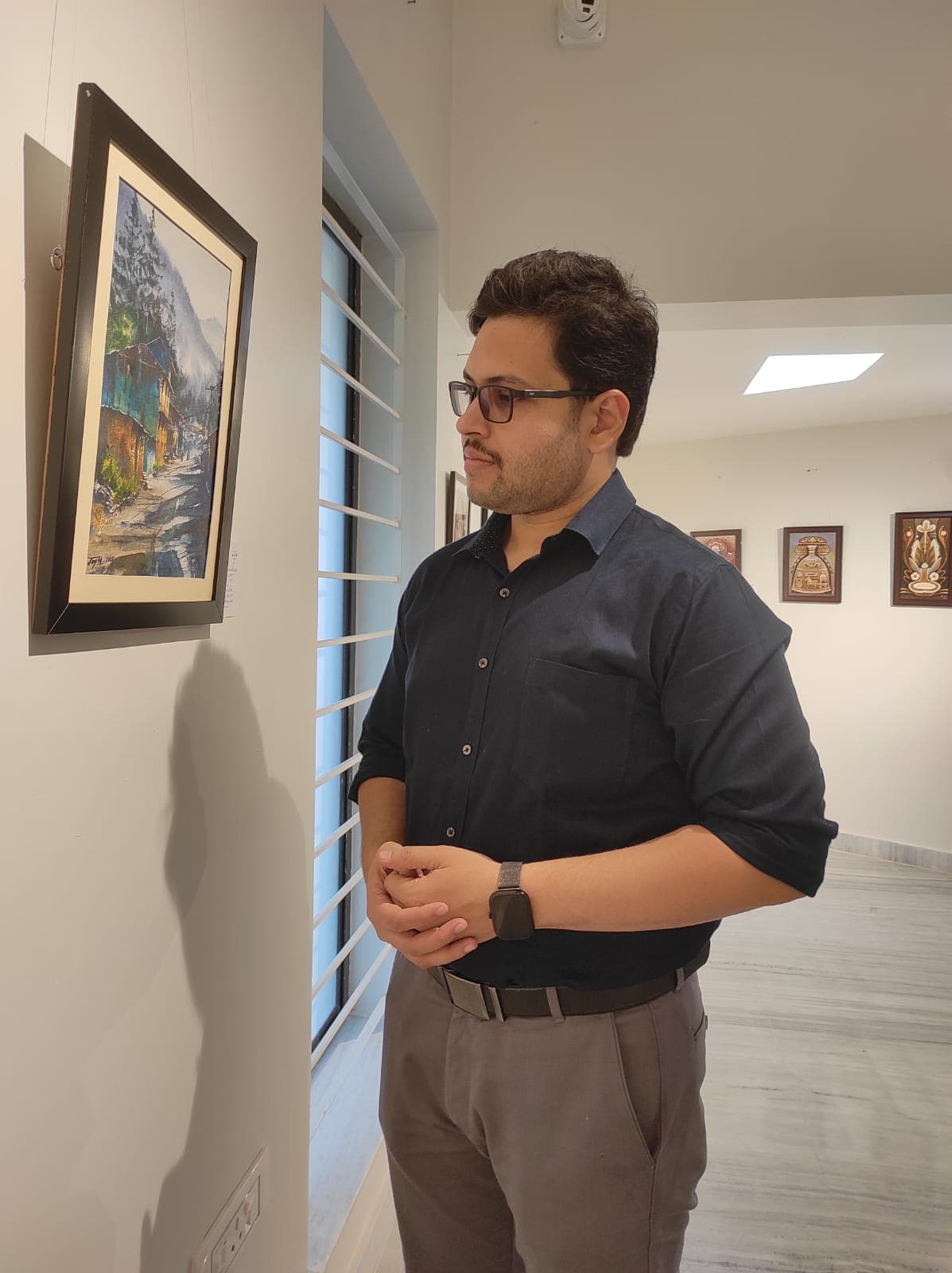
Written by Joy Mukherjee
Joy Mukherjee is a watercolor artist who paints landscapes, village scenes, and atmospheric moments using transparent watercolor on premium 100% cotton watercolor paper. His work is born from memory, light, and atmosphere.