Learn how to buy original watercolor paintings online safely, verify artists, spot fakes, understand pricing, and avoid common scams.
By Joy — watercolor artist, Kolkata. Exhibited at Indian Art Carnival, Shantiniketan 2025.
I have sold original watercolor paintings online. I have also watched buyers get badly burned by listings that used the word "original" to describe a machine-printed sheet of paper. So this guide comes from both sides of the transaction: the artist who ships the work and the collector who deserves to receive exactly what they paid for.
Buying art online is one of the most rewarding things you can do for your living space. But without a gallery wall to stand in front of, doubts are natural. Is this truly a one-of-a-kind painting? Will it survive the journey? Is the seller a real person?
This guide will walk you through exactly what to look for, what to avoid, and how to buy original watercolor paintings with the kind of confidence that comes from actually knowing what you are doing.
1. Verify the Artist's Identity First
Every credible listing starts with a credible person behind it. Before you look at the painting, look at who made it.
Check the About page. Does this artist have a name, a location, a story that feels lived-in rather than generated? A real artist writes about their practice in a specific voice. Generic bio text ("passionate creator who loves art and life") is a red flag.
Look for an active presence elsewhere. Real artists document their process. An Instagram account with process videos, work-in-progress shots, or studio glimpses is a strong trust signal. Social proof is not vanity for artists. It is evidence.
Check for exhibition history or press mentions. An artist who has shown work publicly, been reviewed, or had pieces enter collections will usually mention it somewhere on their site.
Finally, look at portfolio consistency. A legitimate artist has a recognisable style that evolves slowly over time. If a website sells abstract oils alongside hyper-realistic pencil drawings alongside anime digital art, you are likely looking at a reseller or a content mill aggregating images from multiple unknown sources.
2. Demand Specificity in the Listing
A trustworthy artwork listing reads like it was written by someone who held the painting in their hands while typing. Vague listings exist because vague sellers have something to hide.
Look for all of the following before you even consider buying:
Medium and materials: "Watercolor on 300gsm cold-pressed cotton paper" tells you something real. "Wall Art" or "Poster" tells you nothing, and may be deliberate.
Exact dimensions: Not "medium" or "large" but actual inches or centimetres.
Year of creation: When was this made? A dated work has provenance. An undated work makes provenance harder to verify.
Edition status: Is this the only one? Or a print run of 50? The listing should say clearly. If it says "original" but the quantity field shows more than 1, it is not an original.
Framing and shipping format: Does it ship flat, rolled, or framed? This matters a great deal for how it arrives.
If any of these details are missing, ask. The response you get will tell you everything.
3. Read the Photographs Like an Expert
A watercolor painting is a physical object. It has texture. It has granulation where pigment settled into the valleys of the paper. It has soft blooms where wet paint spread and dried on its own terms. These qualities are almost impossible to fake convincingly in a photograph.
When you look at listing photos, ask yourself:
Can I see the paper surface? In a close-up shot, you should see the slight tooth of the paper, the way pigment sits differently in different areas. A flat, uniformly sharp image is more likely a scan or a digital print.
Are the photos in natural light? Good artists photograph their work in daylight, sometimes at an angle to show texture. Purely digital mockups of a painting hanging in a 3D-rendered living room should not be the only images provided.
Does the paint behave like paint? Real watercolor has a particular quality to its edges. Hard edges where water dried. Soft passages where a wash was dropped wet-into-wet. Blooms and backruns. Printed reproductions tend to be too perfect, too uniform.
If you want a close-up and one is not provided, ask for one. Any genuine artist will photograph a detail for a serious buyer without hesitation. I do it regularly.
4. Understand the Difference Between Originals and Prints
This is the distinction that matters most, and it is where the most confusion (and deception) happens.
| Original Painting | Art Print | |
|---|---|---|
| What it is | The actual physical painting, unique | A reproduction, photographed or scanned |
| How many exist | One in the world | Dozens to thousands |
| Resale value | Can appreciate over time | Generally does not |
| What you feel | Texture, brushwork, paint surface | Flat printed surface |
| Price | Higher, reflects artist's time | Lower, reflects production cost |
| CoA | Should always come with one | Not standard |
Watch out for the word "Giclée." It is not a synonym for original. A giclée is a high-quality inkjet print. It can be beautiful and collectible, but it is a reproduction. Any honest seller will say so plainly.
Watch out for "Museum Quality" without further explanation. That phrase describes the print process, not the origin of the work.
If the same "original" appears in a shop with a quantity of 10, you have your answer.
5. Ask About the Certificate of Authenticity
An original painting of any real value should come with a Certificate of Authenticity. This is a signed document from the artist that establishes what you bought and who made it.
A proper CoA includes:
- The title of the work
- Medium and dimensions
- Year of creation
- The artist's signature
This document protects you. If you ever want to resell the work, insure it, or simply prove to a future owner that it is genuine, the CoA is the evidence. Any artist serious about their practice will provide one without being asked.
6. Check Shipping and Packaging Standards
Watercolor paintings on paper are more fragile than oil paintings on canvas. They need protection from moisture, from bending, and from anything that could cause the surface to abrade.
Small works should ship flat between rigid backing boards, sealed in a plastic sleeve to protect against moisture. Large works are safest when rolled with tissue paper protection inside a hard-shell tube.
Read the Shipping Policy before you buy. A professional artist or gallery will describe their packaging process in enough detail that you feel confident before the order is placed. If there is no shipping policy, or it says nothing about how the artwork is actually protected, that is worth factoring into your decision.
7. Know What Correct Pricing Looks Like
A genuine hand-painted watercolor is labor-intensive. A single painting involves reference gathering, preliminary sketches, stretching or taping paper, multiple wash layers with drying time between each, and finishing. For a 10x14 inch piece, the process typically takes anywhere from six to twelve hours, depending on complexity.
In India, original watercolors from practicing artists typically start around INR 5,000 for small works and go upward from there based on size, detail, and the artist's exhibition history.
If you find a listing selling "hand-painted originals" for INR 300 or USD 5, it is a print. It may even be a low-resolution digital print. Price is not the only signal, but it is a clear one.
8. Use Secure Payment Methods
This applies whether you are buying from an individual artist's website or a marketplace.
Use established payment gateways: Stripe, PayPal, Razorpay, UPI through a verified merchant account. These all offer some form of buyer protection.
Avoid direct bank transfers to personal accounts unless you have an established relationship with the seller and have verified their identity through multiple channels.
Never use "Friends and Family" payment options for commercial transactions. Those options are designed for personal transfers and strip you of all buyer protection the moment you use them.
9. Ask One Question Before You Buy
If you are genuinely unsure about a listing, send a message. Ask something specific: what paper did you use for this piece? How long did it take? What was the light like when you painted this scene?
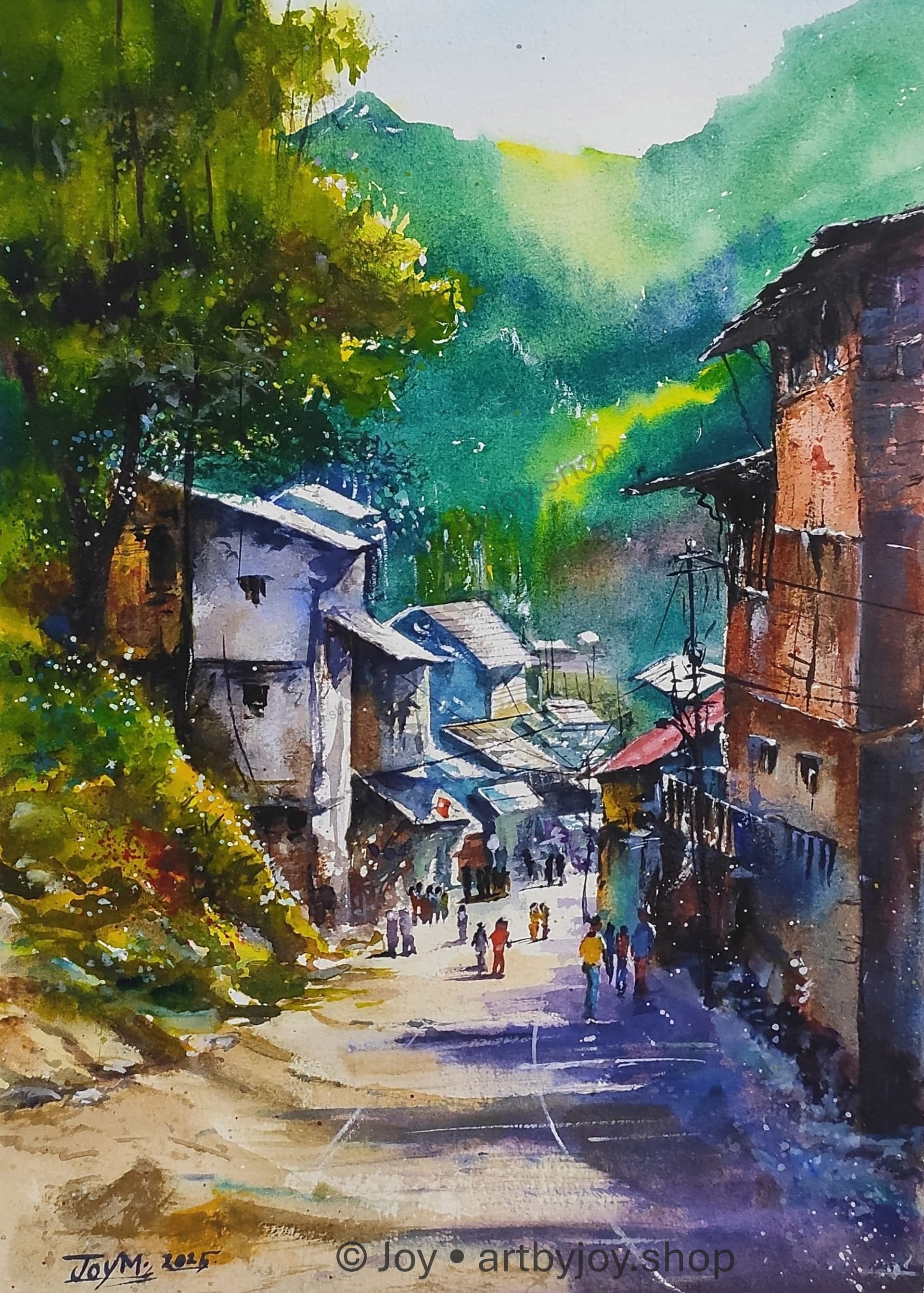
A real artist will answer with the kind of detail that only comes from having actually made the thing. I still remember the afternoon light when I painted the Kumaon pieces, the way the mist was sitting low on the ridgeline. That is not something you can fake with a template response.
A scammer will send something generic, rush you toward checkout, or simply not respond in a way that engages with your actual question.
Your instinct about the quality of that reply is worth trusting.
10. The Right Painting Is Worth the Diligence
An original watercolor painting is not the same thing as art on your wall. It is a physical object that someone made entirely by hand, once, for no one in particular and then for you specifically when you found it.
When it arrives and you hold it up to a window and watch the light move through the pigment the way it moved through the air on the day it was painted, you will understand why none of this diligence felt excessive.
Ready to find yours? Browse the original watercolor landscapes collection, explore the narrative works, or get in touch to discuss a commissioned piece.
Recommended Reading
If you found this guide helpful, you might also enjoy:
- Why Original Watercolor Paintings Feel More Alive Than Prints — A look at the physics and light behaviour of originals.
- How to Buy Art Directly From an Artist — Why buying direct is better for both the collector and the maker.
- What Makes Watercolor Unique — Understanding the medium's unpredictability.
Frequently Asked Questions
How can I tell if a watercolor painting is original or a print? Look for paper texture in close-up photographs, soft and hard paint edges that behave like actual watercolor, and a listing that mentions specific materials. Ask the seller for a macro photo of the surface. Prints are flat and uniform; original paintings show the physical evidence of how they were made.
Does an original watercolor painting come with a certificate of authenticity? It should. Any serious artist selling investment-grade work will provide a signed Certificate of Authenticity that includes the title, medium, dimensions, year, and their signature. If a seller does not offer one, you can ask for it.
What is a fair price for an original watercolor painting in India? For a small original (roughly A4 size) by a practicing artist with exhibition history, expect to pay upward of INR 5,000 to 10,000. Larger or more detailed works start higher. Anything priced below INR 500 and described as "original" is almost certainly a print.
How are original watercolor paintings shipped? Small works should ship flat between rigid boards with a moisture barrier. Larger works may ship rolled in a hard-shell tube. Always check the seller's shipping policy before purchase. A professional artist will describe their packaging in detail.
Can I commission a custom watercolor painting? Yes. Many artists, including myself, accept commissions for custom paintings. Visit the contact page to understand the process, timeline, and pricing involved.
Is it safe to buy art directly from an artist's website rather than a marketplace? Buying direct from an artist's own website is often the safest option because you are dealing with one accountable person, not an anonymous marketplace listing. Verify the artist's identity, use a secure payment method, and check their policies before purchasing.
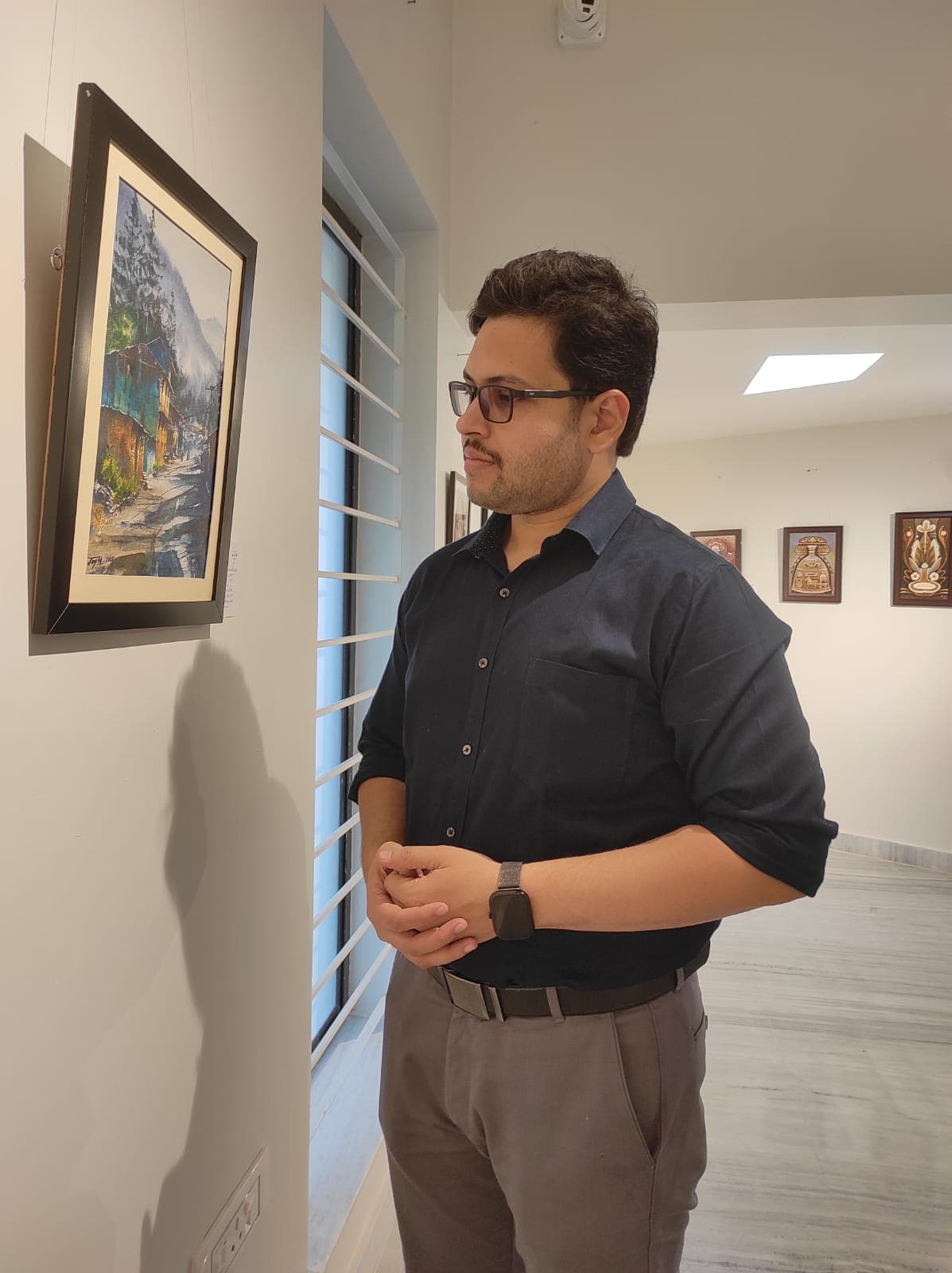
Written by Joy Mukherjee
Joy Mukherjee is a watercolor artist who paints landscapes, village scenes, and atmospheric moments using transparent watercolor on premium 100% cotton watercolor paper. His work is born from memory, light, and atmosphere.